
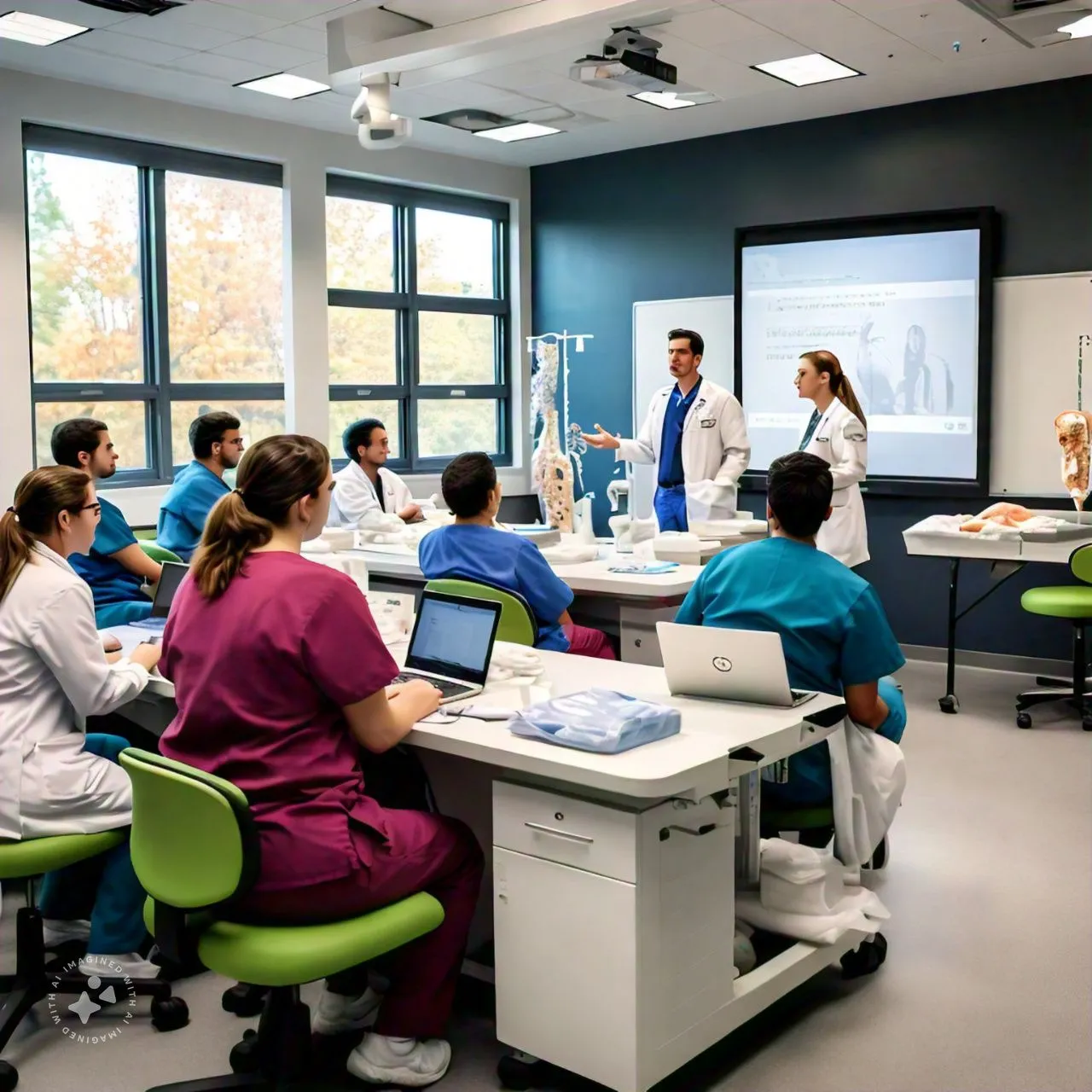
The Future of Medicine: Emerging Trends in Healthcare Education
The Future of Medicine: Emerging Trends in Healthcare Education
The healthcare industry is undergoing rapid transformation, driven by technological advancements, changing patient needs, and evolving educational methodologies. As the future of medicine unfolds, healthcare education must adapt to prepare the next generation of medical professionals for the challenges and opportunities that lie ahead.
In this article, we'll explore the emerging trends in healthcare education that are shaping the future of medicine. From the integration of artificial intelligence (AI) and virtual reality (VR) to the increasing emphasis on interprofessional collaboration and personalized learning, these trends are revolutionizing how medical professionals are trained and how they will practice in the years to come.
The Impact of Technology on Healthcare Education
Technology is at the forefront of the changes sweeping through healthcare education. Innovations such as AI, VR, and big data are not only enhancing the learning experience but also redefining the skills and knowledge required for future healthcare providers.
1. Artificial Intelligence and Machine Learning
Artificial Intelligence (AI) and Machine Learning (ML) are transforming the healthcare landscape, and their integration into medical education is becoming increasingly important. AI-driven tools are being used to analyze vast amounts of medical data, predict patient outcomes, and assist in diagnostic decision-making.
- AI in Diagnostics: Medical students are now being trained to work alongside AI tools that can analyze imaging data, such as X-rays and MRIs, with remarkable accuracy. This not only speeds up the diagnostic process but also allows future doctors to focus on more complex cases and patient care.
- Personalized Learning: AI is also being used to create personalized learning experiences for medical students. By analyzing student performance data, AI can identify areas where students may need additional support and tailor educational content to meet their individual needs.
2. Virtual Reality and Simulation-Based Learning
Virtual Reality (VR) and simulation-based learning are becoming integral components of healthcare education. These technologies provide students with immersive, hands-on experiences that were previously only possible in clinical settings.
- VR in Surgical Training: VR platforms allow medical students to practice surgical procedures in a controlled, risk-free environment. This enhances their skills and confidence before they perform surgeries on real patients. Surgeons can now simulate complex procedures, gaining experience in a virtual setting that closely mimics real-life scenarios.
- Simulation Labs: High-fidelity simulation labs equipped with advanced mannequins and software are enabling students to practice a wide range of medical procedures, from basic CPR to advanced trauma care. These simulations provide invaluable experience in a safe environment, where mistakes become learning opportunities.
3. Telemedicine and Remote Learning
The rise of telemedicine, accelerated by the COVID-19 pandemic, has had a significant impact on healthcare education. As telemedicine becomes a staple of patient care, medical students are being trained in the nuances of virtual consultations and remote patient monitoring.
- Telemedicine Training: Future healthcare professionals are learning how to conduct virtual patient visits, interpret data from remote monitoring devices, and provide care to patients who may be located far from traditional healthcare facilities.
- Remote Learning Opportunities: The shift to online education has expanded access to medical education for students around the world. Online courses, webinars, and virtual conferences are now a common part of medical training, allowing students to learn from experts regardless of geographic location.
The Evolution of Curriculum and Educational Models
As the demands on healthcare professionals change, so too must the curriculum and educational models used to train them. Traditional approaches are being complemented by new methods that emphasize holistic, patient-centered care, and the development of soft skills alongside technical expertise.
1. Interprofessional Education
Interprofessional education (IPE) is gaining traction as a key component of healthcare training. IPE involves bringing together students from different healthcare disciplines—such as medicine, nursing, pharmacy, and social work—to learn how to collaborate effectively.
- Team-Based Learning: By working in interdisciplinary teams, students develop a deeper understanding of the roles and responsibilities of different healthcare providers. This prepares them for the collaborative nature of modern healthcare, where effective communication and teamwork are essential.
- Patient-Centered Care: IPE encourages a patient-centered approach, where care is coordinated across disciplines to address the holistic needs of patients. This model of education is critical in preparing future healthcare providers to deliver comprehensive, integrated care.
2. Competency-Based Education
Competency-based education (CBE) is an emerging trend that focuses on developing specific skills and competencies rather than simply completing a set number of hours or courses. This approach allows for more personalized and flexible learning experiences.
- Mastery of Skills: In a CBE model, students progress through their education by demonstrating mastery of specific skills and knowledge. This ensures that all graduates meet a high standard of competency, regardless of the time it takes them to achieve it.
- Adaptability: CBE also allows for adaptability in the curriculum, making it easier to incorporate new technologies, treatments, and approaches as they emerge in the healthcare field.
3. Focus on Wellness and Resilience
The well-being of healthcare providers is increasingly recognized as a critical factor in the quality of patient care. As a result, medical education is beginning to place greater emphasis on wellness, resilience, and mental health.
- Mindfulness and Stress Management: Programs are being developed to teach students mindfulness techniques, stress management, and self-care strategies. This not only helps them cope with the demands of their education but also prepares them for the high-stress environments they will encounter in their careers.
- Support Systems: Educational institutions are creating support systems that include counseling services, peer support groups, and wellness programs. These initiatives aim to reduce burnout and promote a healthier work-life balance among students.
The Role of Data and Analytics in Healthcare Education
Data and analytics are playing an increasingly important role in shaping the future of healthcare education. By harnessing the power of big data, educational institutions can gain insights into student performance, curriculum effectiveness, and patient outcomes.
1. Learning Analytics
Learning analytics involves the collection and analysis of data related to student performance and engagement. This data can be used to improve educational outcomes and personalize the learning experience.
- Identifying Learning Gaps: By analyzing data on student performance, educators can identify areas where students may be struggling and intervene with targeted support. This ensures that no student is left behind and that all students achieve the necessary competencies.
- Optimizing Curriculum: Data analytics can also be used to assess the effectiveness of different teaching methods and curricular components. This allows for continuous improvement of the curriculum based on evidence rather than intuition.
2. Predictive Analytics in Student Success
Predictive analytics is being used to identify students who may be at risk of academic difficulties or burnout. By analyzing patterns in student data, institutions can take proactive steps to provide support before problems arise.
- Early Intervention: Predictive models can identify students who are likely to struggle with specific courses or clinical rotations. This allows educators to provide early intervention, such as tutoring or counseling, to help these students succeed.
- Personalized Learning Pathways: Predictive analytics can also be used to create personalized learning pathways for students, allowing them to progress at their own pace and focus on areas where they need the most development.
Globalization and the Future of Healthcare Education
The globalization of healthcare is another trend that is shaping the future of medical education. As healthcare becomes more interconnected, educational institutions are embracing global perspectives and preparing students to work in diverse, multicultural environments.
1. International Collaborations
Collaborations between medical schools and healthcare institutions across different countries are becoming more common. These partnerships provide students with opportunities to gain international experience and learn from different healthcare systems.
- Global Health Programs: Many institutions now offer global health programs that allow students to study and work abroad. These programs expose students to different healthcare challenges and solutions, broadening their perspectives and enhancing their cultural competence.
- Cross-Border Research: International collaborations in research are also increasing, with students and faculty working together to address global health issues such as infectious diseases, chronic illnesses, and health disparities.
2. Cultural Competence Training
As healthcare providers increasingly serve diverse populations, cultural competence training is becoming an essential part of medical education. This training helps students understand and respect cultural differences, improving the quality of care they provide to patients from various backgrounds.
- Inclusive Curriculum: Medical schools are incorporating cultural competence into their curricula, ensuring that students are prepared to provide care that is sensitive to the cultural and social contexts of their patients.
- Language Skills: Some programs also offer training in medical terminology in different languages, allowing students to communicate more effectively with non-English-speaking patients.
The future of medicine is being shaped by a convergence of technological advancements, evolving educational methodologies, and a greater emphasis on holistic, patient-centered care. As these trends continue to influence healthcare education, the next generation of medical professionals will be better equipped to meet the challenges and opportunities of the 21st century.
By embracing these emerging trends, educational institutions can ensure that their graduates are not only competent and knowledgeable but also adaptable, compassionate, and ready to lead the way in a rapidly changing healthcare landscape.
As we look to the future, it is clear that the ongoing evolution of healthcare education will play a critical role in improving patient care and outcomes worldwide. The integration of technology, personalized learning, interprofessional collaboration, and global perspectives will be key to preparing healthcare providers for the complex and dynamic environments they will encounter throughout their careers.